
Comparison
Electric vs manual herb grinders: which is better?
Short answer
An electric grinder is better if you grind often, find twisting hard, or are tired of cleaning. A manual grinder is better if you grind rarely, want the lowest price, or never want to charge anything.
Neither kind is better for everyone. They trade effort for cost, and the right choice depends on how often you grind and what annoys you most about the grinder you have now.
Where a manual grinder wins
- Price. A decent manual grinder costs a fraction of an electric one.
- No battery. It works anywhere, any time, with nothing to charge.
- Size. Most fit in a pocket.
- Simplicity. There is no motor to fail.
Where a manual grinder loses
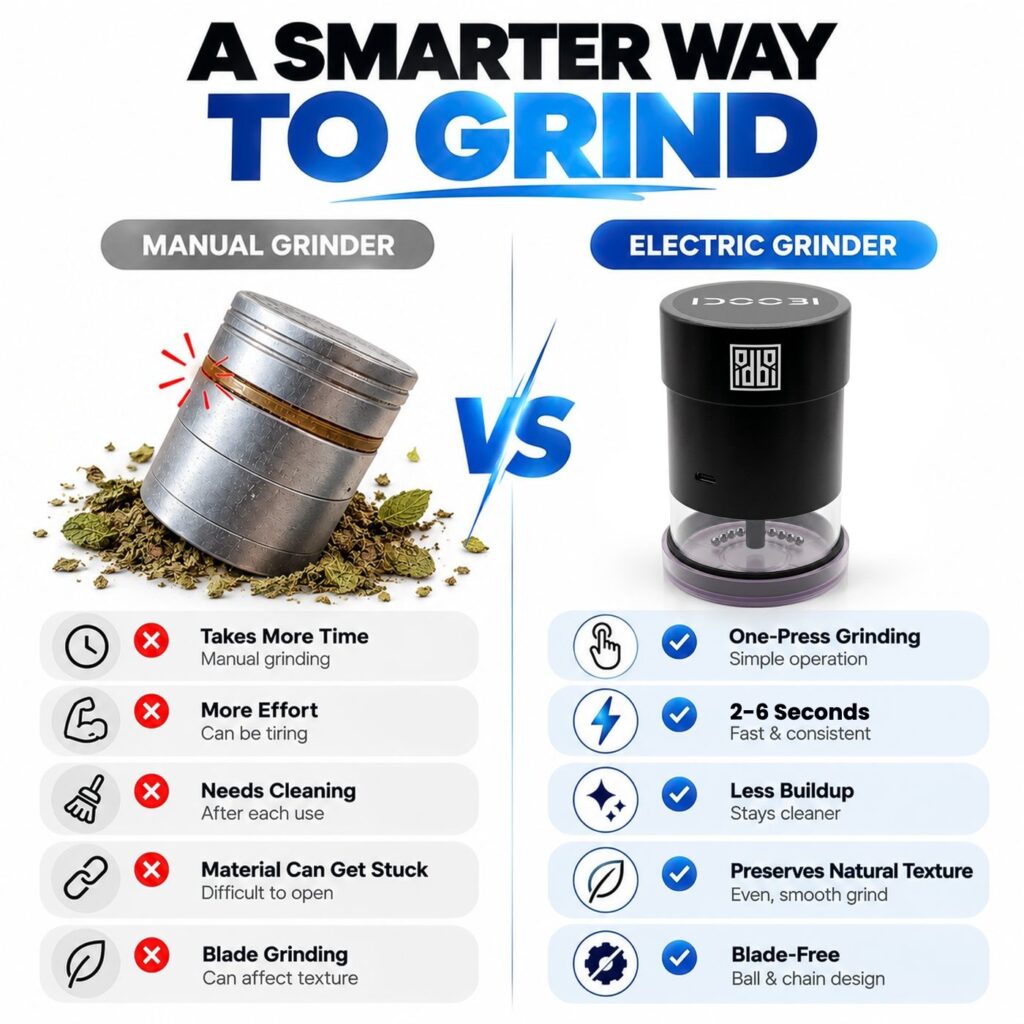
- Effort. You twist two halves against each other, usually for 15 to 20 seconds.
- Clogging. Sticky residue packs between the teeth, and every week it gets harder to turn.
- Cleaning. A proper clean takes 30 to 45 minutes. See how to clean a herb grinder.
- Stuck lids. Left long enough, the lid stops opening at all. See why grinders get stuck.
Where an electric grinder wins
- Speed and effort. A press of a button for a few seconds does the work.
- Hands. There is nothing to grip and twist, which matters if twisting is uncomfortable.
- Consistency. The same hold time gives the same result.
Where an electric grinder loses
- Cost. You pay more up front.
- Charging. It has a battery, so at some point it needs a cable.
- Powder. Some blade models overgrind. See do electric grinders turn herbs into powder? (The idoobi is bladeless and uses a stainless steel ball chain.)
- Dried herbs only. Damp or fresh herbs clump instead of breaking.
Side by side
| Manual grinder | Electric grinder | |
|---|---|---|
| Effort | Twist by hand | Press a button |
| Time per grind | About 15 to 20 seconds | A few seconds |
| Power | None needed | Rechargeable battery |
| Cleaning | Regular, or it sticks | Depends on the design |
| Price | Lower | Higher |
| Best for | Occasional use, travel | Daily use, less effort |
Which should you choose?
If you grind a few times a month and your grinder still turns freely, keep it. If you grind most days, or you have ever had to fight a grinder open, an electric one will repay its price in time and frustration. Our buying checklist covers what to look for.
How the idoobi handles this
An electric grinder without the usual drawbacks
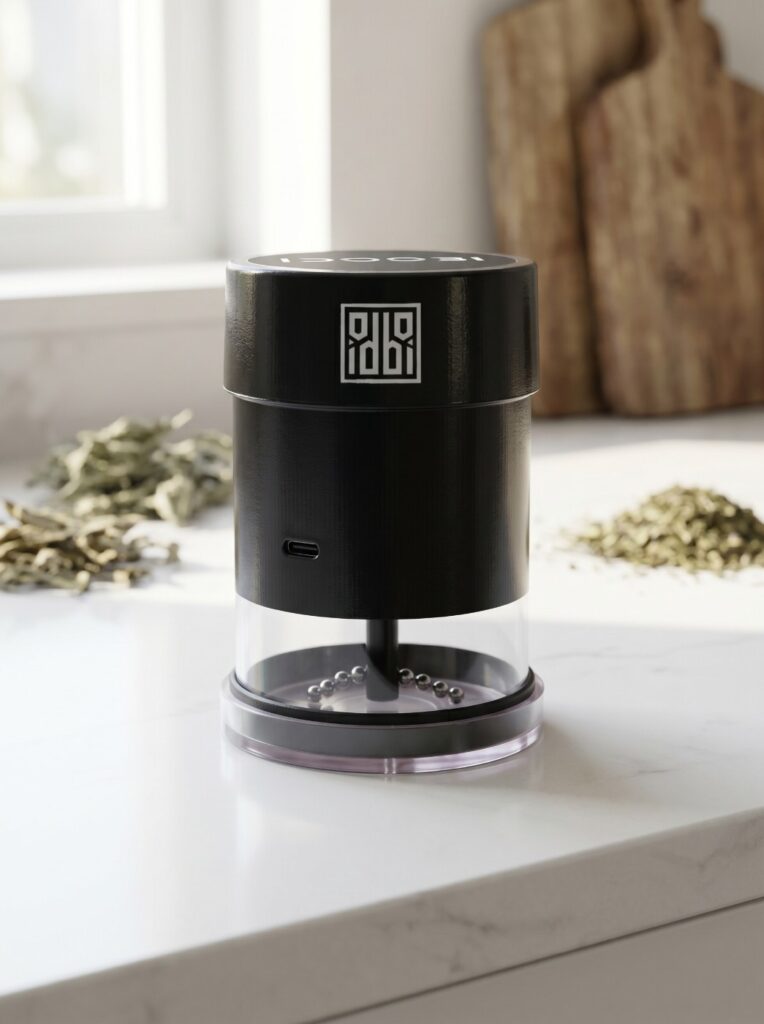
- It has no teeth and no blades. A stainless steel ball chain does the grinding, so there is nothing to clog and nothing to clean.
- It runs only while you hold the top, so you choose coarse, medium or fine.
- One charge lasts 62 to 90 grinds, which is over two months at one grind a day.
- It is for dried herbs, up to 3 g per load.
- If it is not for you, you can return it within 90 days, even used.
More guides
- Best electric herb grinder: what to look forSix things to check before you buy one.
- Why does my herb grinder keep getting stuck?What causes it, and how to open one that will not budge.
- Do electric grinders turn herbs into powder?Why some do, and how to get a coarse grind.
- How to clean a herb grinderStep by step, for metal and plastic grinders.
- Herb grinders for people with limited hand strengthWhat to look for when twisting is hard.
- Chain vs blade vs teeth: how each grinder worksThree mechanisms, and what each is good and bad at.