
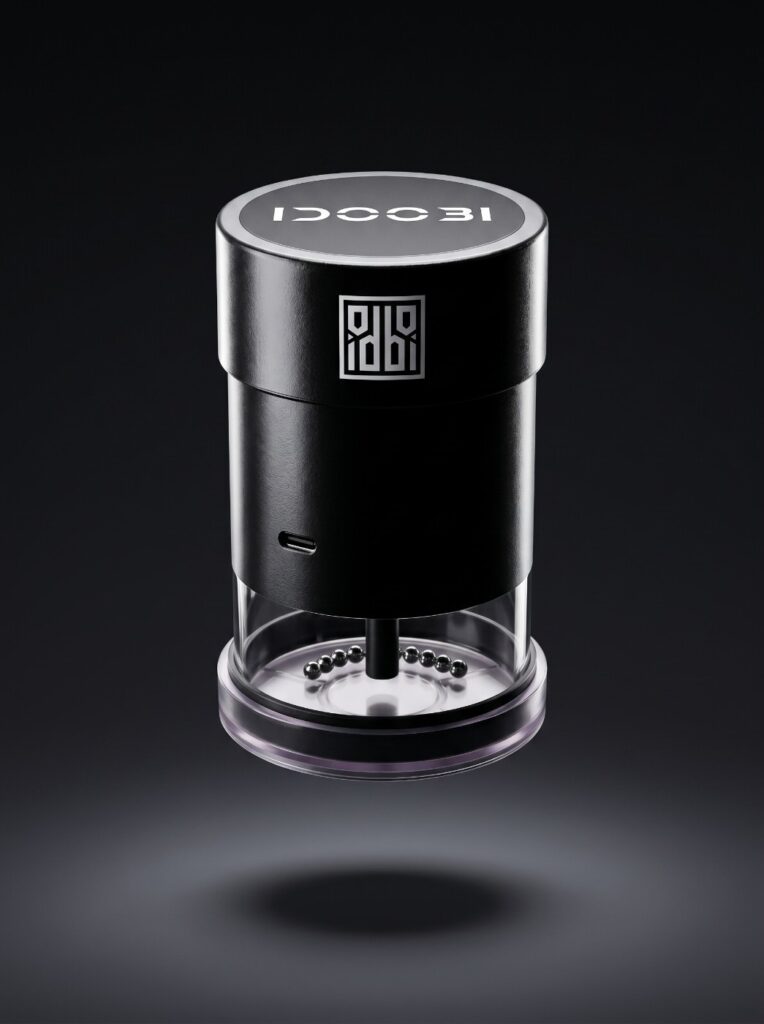
Best electric herb grinder: what to look for
The best electric herb grinder is one that grinds evenly, lets you choose between coarse and fine, does not clog, and comes with a battery and a warranty you can rely on. Check those things before you look at the price.
Electric herb grinders look alike in photos and behave very differently on a kitchen counter. Some turn everything to dust. Some work well for a month and then jam. These six questions sort the good ones from the rest.
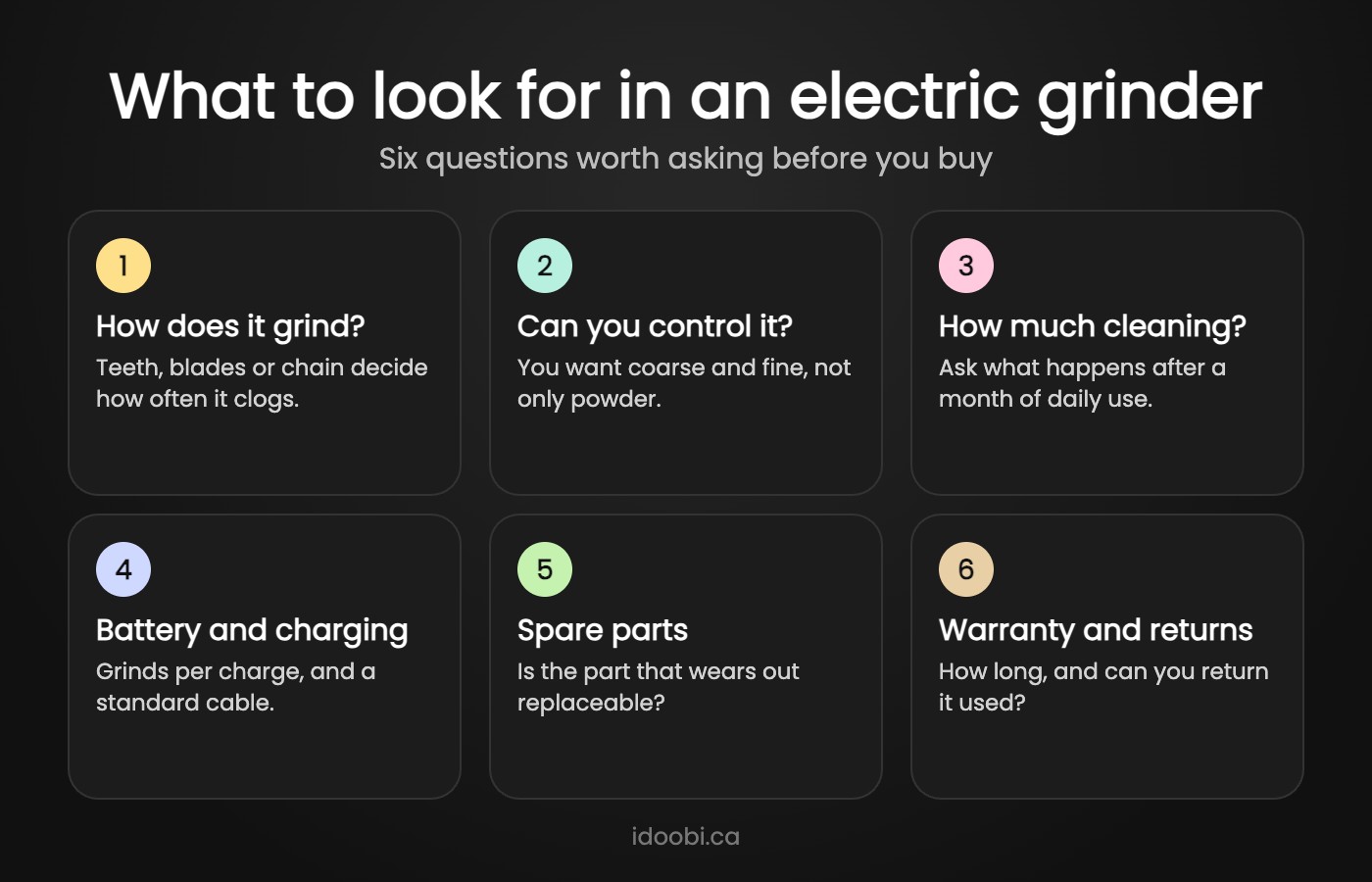
1. How does it grind?
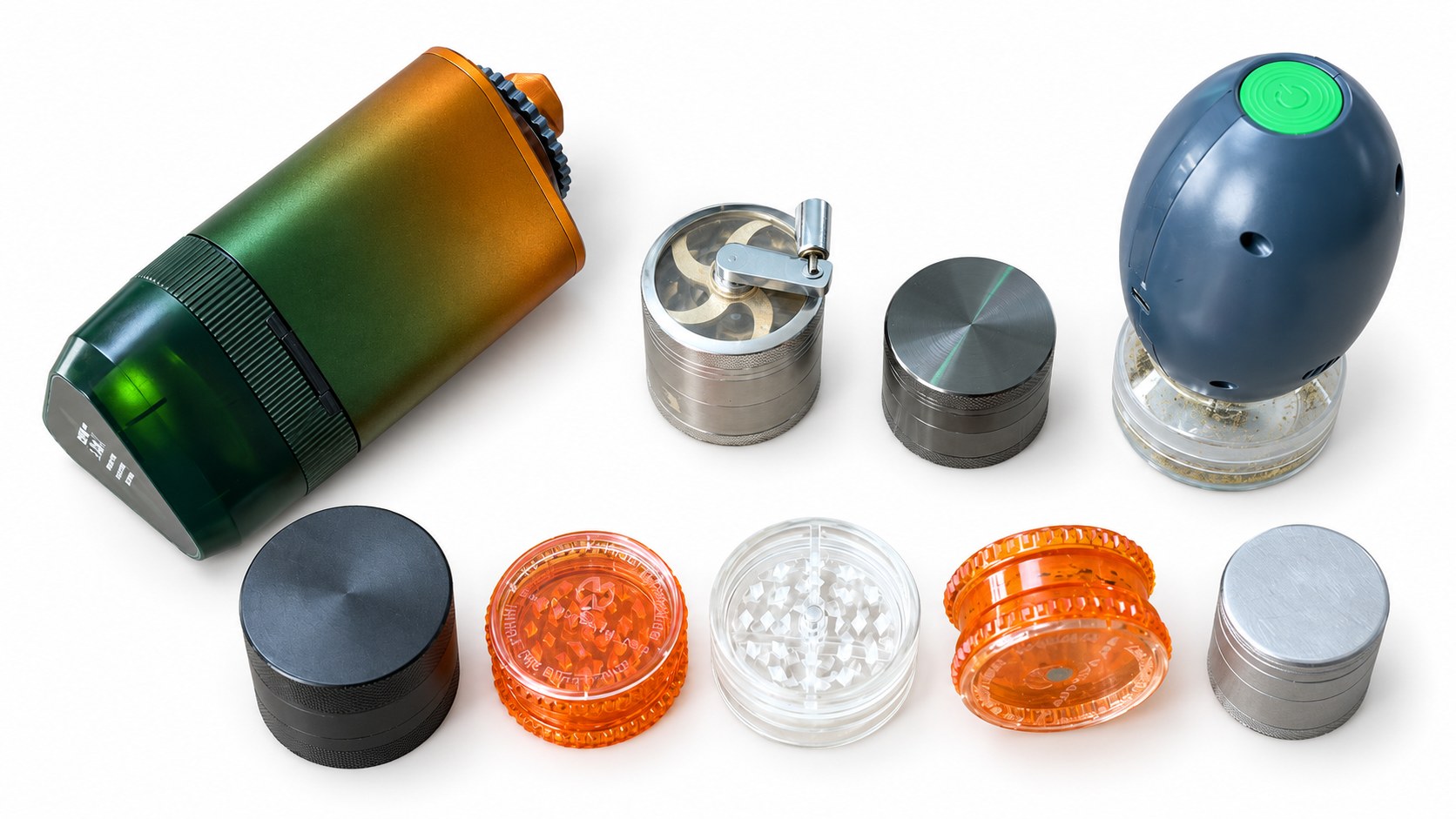
There are three designs. Teeth tear herbs between two plates. Blades slice them at high speed. A chain knocks them apart as it spins. The design decides almost everything else: how even the grind is, how easily you can overdo it, and how often the grinder clogs. Our guide to chain, blade and teeth grinders explains each one. (Unlike these, the idoobi is bladeless: a stainless steel ball chain does the grinding, so there is nothing to clog and nothing to clean.)
2. Can you control the grind?
This is the complaint people make most about electric grinders: powder at the bottom and big pieces on top. Look for a grinder that runs only while you hold the button, so you decide when to stop. Avoid ones with a fixed timer or a single speed that you cannot interrupt. See do electric grinders turn herbs into powder?
3. How much cleaning will it need?
Ask what the grinder is like after a month of daily use, not on day one. Sticky residue builds up on teeth and in corners, and a motor does not make that go away. Check whether the grinding chamber comes apart, whether it can get wet, and how long cleaning takes.
4. Battery and charging
Look for the number of grinds per charge, not only the battery size. A grinder that charges by USB-C uses the cable you already own. One that works while plugged in will not leave you waiting.
5. Spare parts
Every grinder has one part that wears: the teeth, the blade or the chain. Find out whether you can replace it yourself, what it costs, and whether a spare is in the box. (The idoobi is bladeless. It grinds with a stainless steel ball chain.)
6. Warranty and returns
A grinder with a motor and a battery should carry at least a one-year warranty. A return policy that still applies after you have used it is worth more than one that only covers sealed boxes, because you cannot judge a grinder without grinding.
When an electric grinder is the wrong choice
- You grind once or twice a month. A simple manual grinder costs less and never needs charging.
- Your herbs are damp or fresh. Electric grinders are made for dried herbs.
- You want something to carry in a pocket. Most electric grinders are the size of a small mug.
How the idoobi answers the six questions
- How it grinds: a stainless steel ball chain, with no teeth or blades.
- Grind control: it runs only while you hold the top. About 2 seconds for coarse, 4 for medium, 6 for fine.
- Cleaning: it does not need cleaning. We have used one for a year without cleaning it.
- Battery: 62 to 90 grinds per charge, USB-C, full in 1 to 2 hours, and it works while plugged in.
- Spare parts: a spare chain is in the box, and it swaps in seconds with no tools.
- Warranty and returns: 1 year included, 5 years optional, and 90-day returns even if you have used it.
More guides
- Electric vs manual herb grinders: which is better?Where each one wins, and who should pick which.
- Why does my herb grinder keep getting stuck?What causes it, and how to open one that will not budge.
- Do electric grinders turn herbs into powder?Why some do, and how to get a coarse grind.
- How to clean a herb grinderStep by step, for metal and plastic grinders.
- Herb grinders for people with limited hand strengthWhat to look for when twisting is hard.
- Chain vs blade vs teeth: how each grinder worksThree mechanisms, and what each is good and bad at.